Product Design / Opinion Labs
Opinion Trade
A prediction market for real-world events, from economic releases to sports and crypto.
- Role
- Founding Product DesignerSole designer on the founding teamWorking directly with founders and engineers, from early product decisions through design and implementation.
- Scope
- Product UX/UI · Visual Design
- Prototyping · Coded Design System
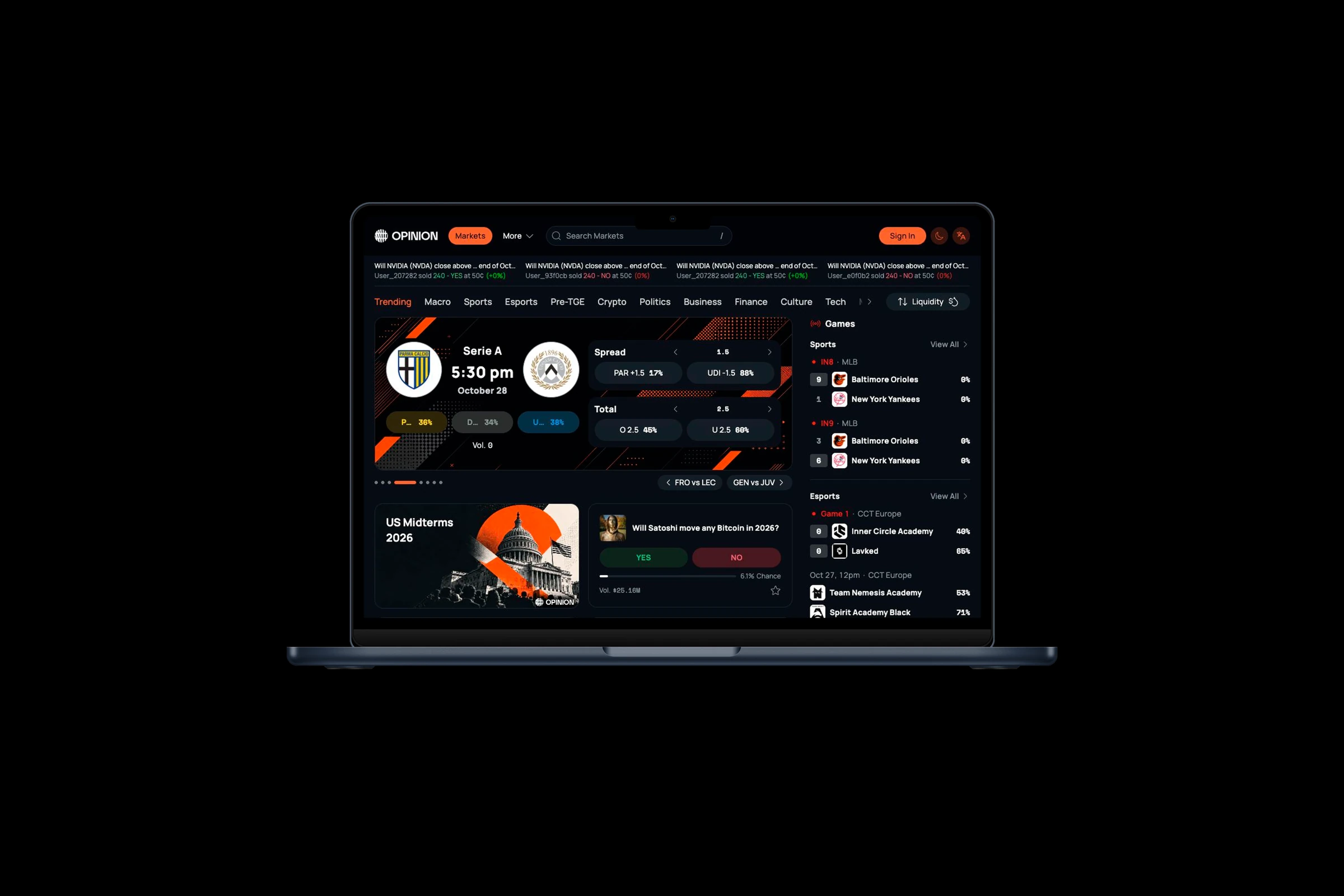
Market discovery.
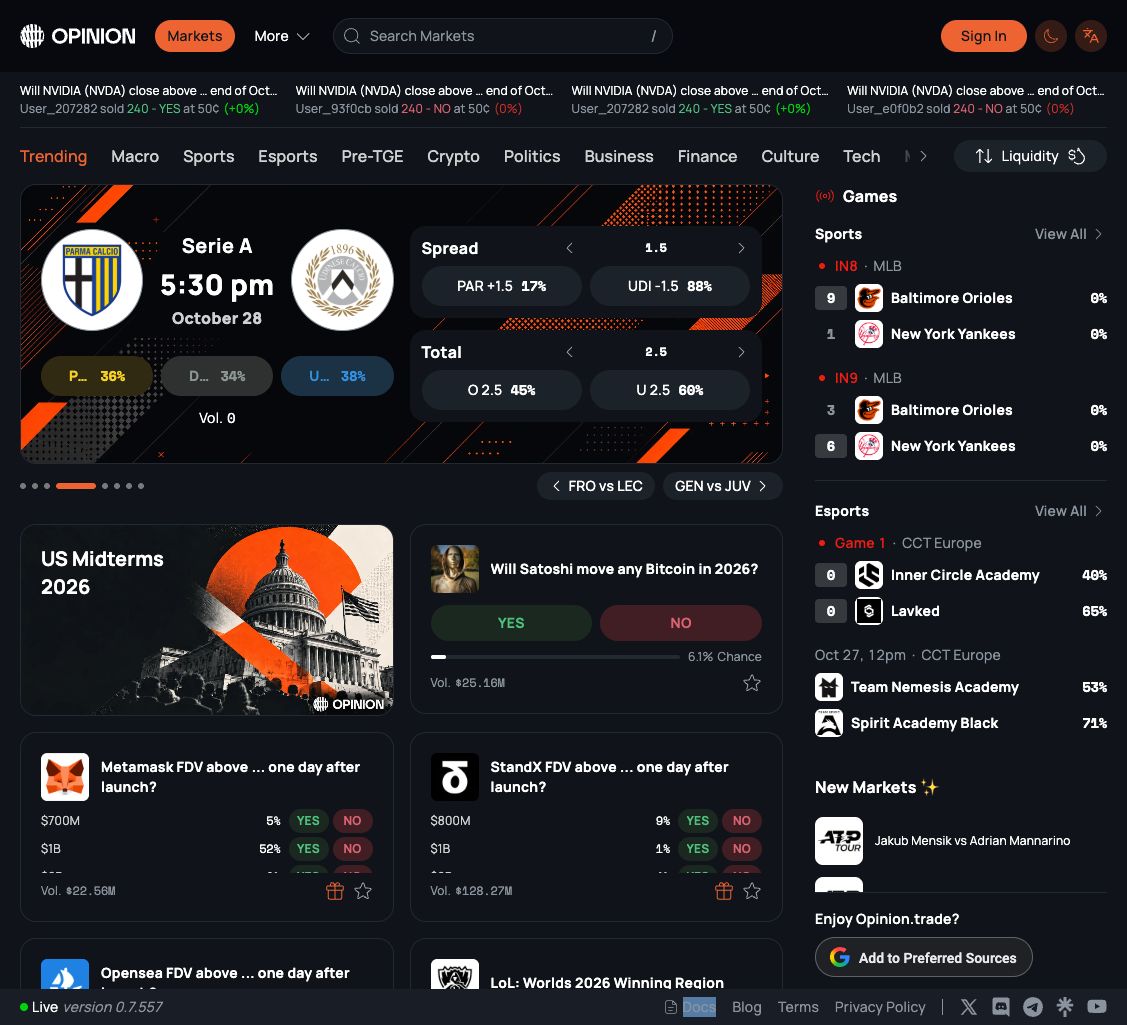
I used this prototype to explore how different user mental models call for different entry points. Some people arrive looking for a price or a live game. Others need the story behind an event, help understanding Prediction Markets, or a way to pick up their existing positions.
Switch user scenarios to compare how the hero, main feed and sidebar respond to those needs. The layouts are design hypotheses for comparison, rather than a single finished homepage.
Switch user scenarios to explore different entry points, then compare or rearrange the modules.
Use the actual coded design.
The live preview loads from my published design system. If it does not appear, open the demo in a new tab. On smaller screens, the frame follows the available width.
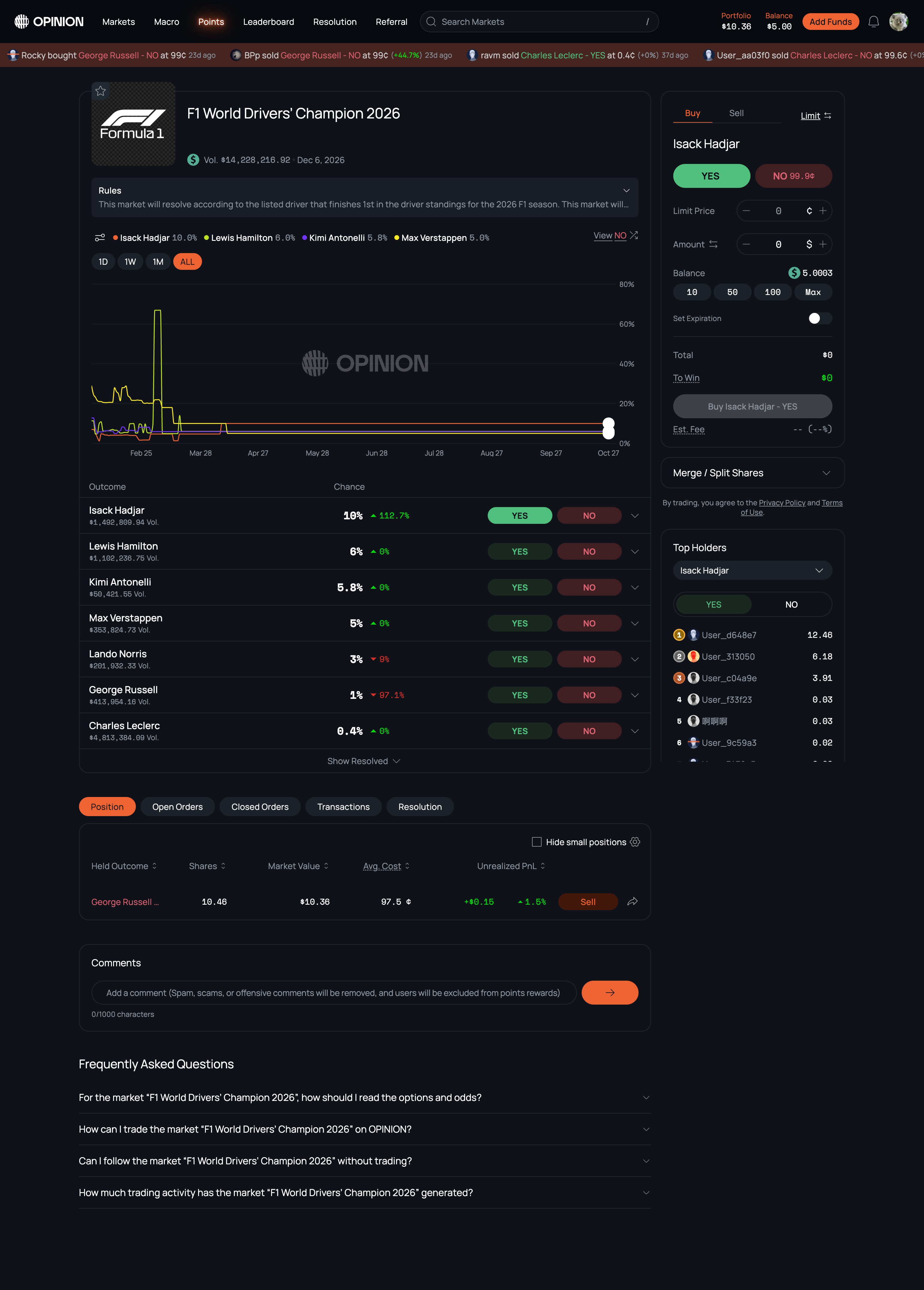
Inside a market.
The market workspace separates understanding the event from preparing an order. The question, resolution rules and price history establish context; the adjacent panel groups the selected outcome, price and amount. Positions and order history sit below as a separate activity area. Scroll through the full market page to explore the interface.
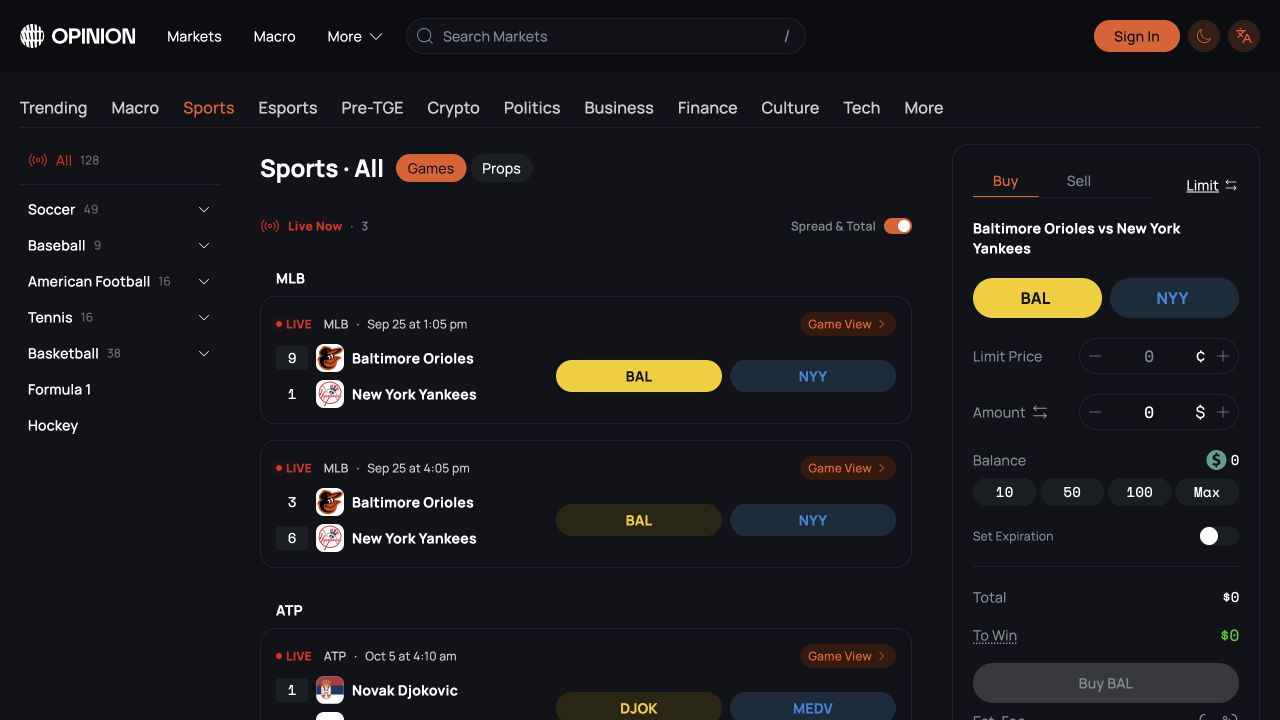
Sports.
Fixtures combine teams, schedules and several outcome types. Games rows keep those fields aligned for comparison, while Props use question-led cards. Each layout makes room for its market’s information, with more rules to maintain than a universal card.
Explore the coded Games reference, including sport filters and Spread & Total display options.
For the smaller Games module, I defined a fixed heading, shared display space across Sports and Esports, and upcoming states without a score. Those rules are also expressed in coded UI for implementation review.
Explore the Games reference demo: filter sports and toggle Spread & Total. Props and live trading are not implemented in this demo.
Use the actual coded design.
The live preview loads from my published design system. If it does not appear, open the demo in a new tab. On smaller screens, the frame follows the available width.
Finance.
Finance offers two ways into the same market context. Assets leads with the asset and its price history; Markets leads with prediction questions and outcomes. Separate views keep each browsing task focused, while the asset dashboard brings price context and related markets together. Try the coded Finance experience: switch between Assets and Markets, then open an asset to explore its dashboard.
Switch between Assets and Markets, then open an asset to explore its dashboard.
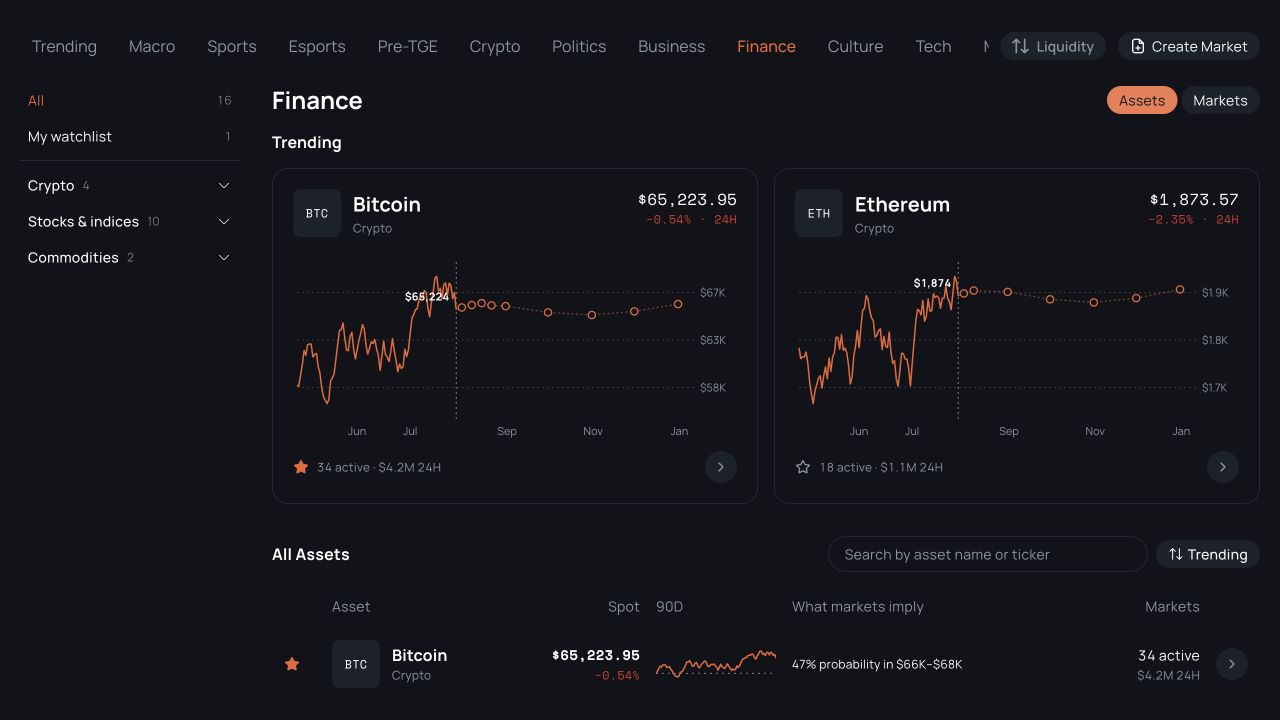
Use the actual coded design.
The live preview loads from my published design system. If it does not appear, open the demo in a new tab. On smaller screens, the frame follows the available width.
Macro.
Macro organizes browsing around economic releases: when an event happens, what is expected and which outcomes can be traded. The release provides a shared context for forecasts and outcome choices, keeping time-sensitive information tied to the market question. This official preview shows the experience in motion, connecting world events with prediction markets.
AI prompt.
Opinion AI opens another starting point: creating a market around a question. This official walkthrough introduces permissionless market creation and AI Oracle resolution.
Beyond the trade.
Resolution determines a market’s outcome using its stated rules. The coded interface distinguishes Proposed, In review and Finalized states to make the status of each result explicit. All Proposals provides a market-wide view, while My Disputes keeps a participant’s own cases separate. This lets resolution progress and personal involvement be reviewed within the same workspace.
The interactive interface is a design-system demo with sample records. Explore proposal states and dispute views; each live market’s own rules govern its resolution.
Across these experiences, recurring interaction patterns became shared component rules and coded examples. The Opinion Design System case explores how those rules support implementation across the product.
Switch between proposal states and inspect the sample dispute and reward views.
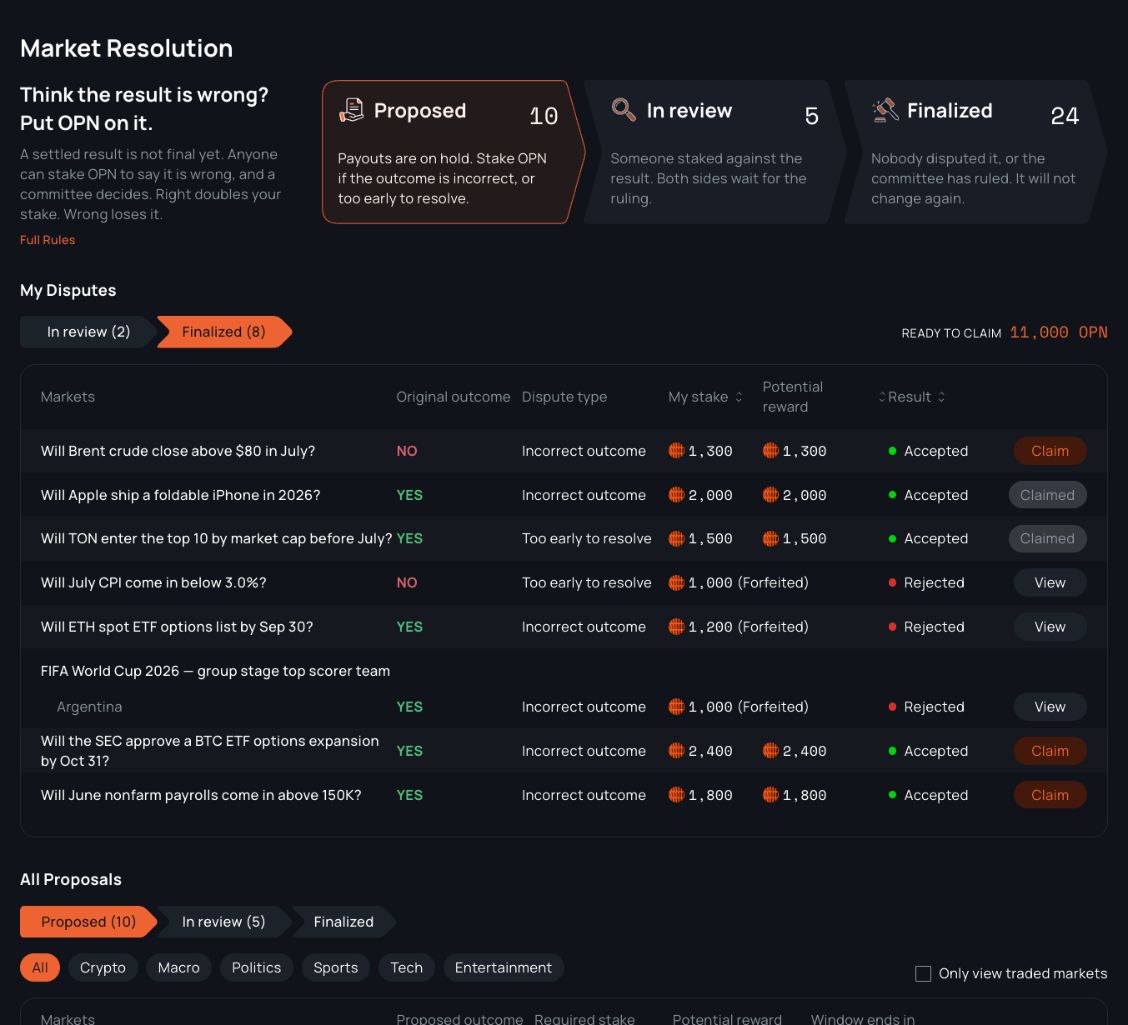
Use the actual coded design.
The live preview loads from my published design system. If it does not appear, open the demo in a new tab. On smaller screens, the frame follows the available width.